
You count down to the last bell, collapse into summer, and wait to feel like yourself again. Then August comes — and the dread creeps back.
If that cycle sounds familiar, you’re not broken and you’re not ungrateful. You’re experiencing something most educators quietly live through every year.
Summer break feels like it should be the cure. A few weeks of rest, no grading, no 6 a.m. alarms — surely that fixes everything?
Here’s the hard truth: real teacher burnout recovery rarely happens by accident over a break. Rest helps, but rest alone doesn’t undo what a draining year built up. That’s why the same exhaustion is waiting for you in the fall.
The good news is that the cycle can be broken — just not the way most people think. Let’s unpack why summer isn’t the fix, and what genuinely is.
The summer reset myth
Most teachers carry a quiet belief: “I just need to make it to summer.” It’s the light at the end of every grading pile.
And summer does matter. It gives you space, distance, and a chance to breathe. But space is not the same as recovery.
Think of it like a phone with a failing battery. Turning it off for a while stops it from dying right now — but the moment you turn it back on, the same drain returns. The underlying problem was never the lack of “off” time.
Burnout specialists are blunt about this. One of the most damaging patterns is telling yourself you’re just tired, that every teacher feels this way, and that summer will sort it out.
The reality is harder and more useful: burnout is a condition with a trajectory. The longer it goes unaddressed, the longer real teacher burnout recovery takes.
That’s why some teachers notice the cycle getting worse year after year. Each summer resets a little less than the one before, because the underlying drain keeps compounding. Recognizing that pattern early is what lets you interrupt it — before it pushes you toward leaving a career you might otherwise love.
Why the burnout comes back every fall
If summer truly cured burnout, you’d return in August feeling reset. Instead, many teachers feel the anxiety return the moment they step into a planning meeting. Here’s why.
Your nervous system is still in survival mode
A demanding school year keeps your body in a near-constant state of stress. Weeks of rest soothe the surface, but a nervous system stuck in overdrive doesn’t fully reset just because the calendar flips.
As one educator-coach puts it, summer gives you space but not the tools — the stress patterns are still there when you walk back in.
You might notice this even during break: trouble sleeping in the first weeks, a restless feeling when you finally sit still, or a strange guilt about resting. Those are signs your system hasn’t downshifted yet. Genuine recovery starts only after that settling happens — which is why a two-week vacation rarely feels like enough.
The patterns and boundaries didn’t change
Summer pauses the workload; it doesn’t rewrite it. The blurred boundaries, the habit of saying yes to everything, the emotional weight you never processed — all of it is still loaded and waiting.
Nothing inside the system changed, so the same pressures produce the same result. That’s not a personal failing. It’s a predictable outcome — and a widespread one. When educators are surveyed about why they think about leaving, burnout and unsustainable workload come up again and again. This isn’t a niche problem; it’s one of the most common reasons good teachers walk away.
What teacher burnout recovery actually requires
If time off isn’t enough, what is? Recovery comes from changing the inputs, not just pressing pause. Two things matter most.
Tools, not just time
Lasting recovery is built on skills: setting boundaries that hold, regulating stress before it accumulates, and creating systems that stop the workload from swallowing your evenings.
Summer is the ideal moment to build these — not because rest fixes you, but because you finally have the mental room to install new habits. Used with intention, the break becomes a tool rather than a temporary escape.
Removing the repetitive load before it rebuilds
A huge share of teacher exhaustion comes from repetitive, time-draining tasks — planning, grading, endless emails. If you walk back into the same flood in August, recovery erodes fast.
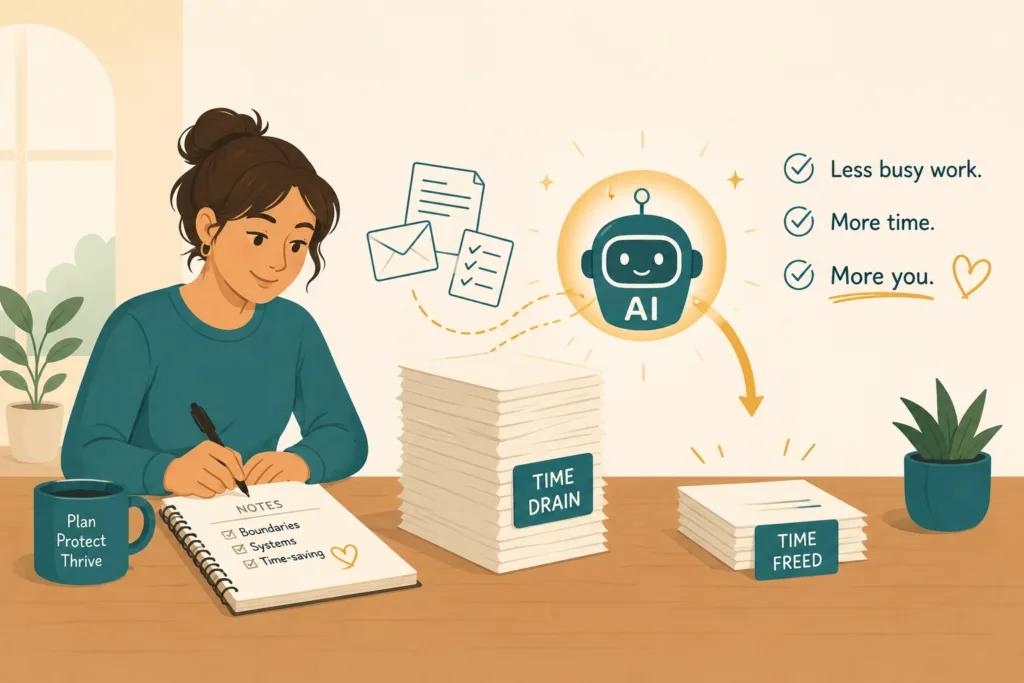
This is where AI quietly changes the math. Used well, it takes the first pass on the repetitive work — lesson outlines, feedback drafts, parent emails — so the load that rebuilt your burnout last year doesn’t rebuild it again.
Imagine walking into the new year with your most repetitive task already cut in half. Instead of three hours of Sunday lesson planning, you spend forty minutes reviewing and personalizing AI-drafted outlines. That reclaimed time is exactly what stops the slow slide back into exhaustion.
The goal isn’t to work through summer. It’s to make sure the fall version of your job is lighter than the one that drained you.
A realistic summer recovery plan
You don’t need to “optimize” your break into another job. A few intentional moves protect the rest you’re getting and carry it into the school year.
- Rest first, with no guilt. The early weeks are for genuine recovery. Don’t fill them with productivity. Let your nervous system actually downshift.
- Name what drained you. Halfway through summer, write down the specific things that burned you out last year — not vague “everything,” but concrete drains.
- Pick one boundary to install. Choose a single limit for next year and decide now how you’ll hold it. One real boundary beats ten good intentions.
- Set up one time-saving system. Before August, build one AI-assisted workflow (grading, planning, or emails) so you start the year already lighter.
- Plan your “hard stop.” Decide the time work ends each day next year — and protect it like an appointment.
None of this requires a perfect plan. It requires changing one or two inputs so August doesn’t hand you back the exact load you just escaped.
Summer is the start, not the cure
Here’s the reframe worth keeping: summer break isn’t the solution to teacher burnout — but it can be the beginning of recovery, if you use it for more than just collapsing.
Rest restores you for now. Tools, boundaries, and lighter systems keep you restored when the bell rings again. That combination — real rest plus real change — is what genuine teacher burnout recovery looks like in practice.
You’ve spent enough years pouring yourself out for everyone else. This break, save a little of that care for the person who makes it all possible — you.

Sources
- National Education Association — Survey: Alarming Number of Educators May Soon Leave the Profession (Feb. 1, 2022)
- The Resilient Teacher Podcast — Why Summer Break Is Not Going to Get You Out of Teacher Burnout (Teaching Mind Body and Soul)
This article is for general informational and educational purposes only and does not constitute mental health or medical advice. If you are struggling, please reach out to a qualified professional or your employee assistance program.

Hi, I’m Marcos Antonio — a researcher with a deep passion for education and technology.
I created GrowthLane because I’ve seen firsthand the exhaustion that takes hold of so many teachers, and how few people talk about the ways out. I believe educators deserve more time, less burnout, and the freedom to build the next chapter of their own careers — and that artificial intelligence, used the right way, can make all of it happen faster.
Here you’ll find practical strategies to ease your workload with AI, recover from burnout, earn extra income, and — if you choose to — transition into a career beyond the classroom. No magic formulas. Just honest, tested advice, written for the real lives of the people who teach — and grounded in deep research on the subject.
When I’m not writing, you’ll find me exploring new tools, going for long walks, drinking too much coffee, playing online games, and spending time with my family — the greatest purpose of my life. I’m so glad you’re here. Let’s build a brighter path together.